

In a new song called “I Got Swag,” 50 Cent says: “Gettin paper’s my objective. Yup, now your chain gone. One false move and CLAP, now your brain’s gone . You like me, you aight with me; me? I’m into me. I destroy my enemies, even if they’re kin to me. Do ’em like the Kennedy’s. Ching-ching, that’s mo’ bread. Say somethin slick out yo’ mouth, I’ll come for yo’ head.”
The descent of hip-hop into its current abysmal state is ruining its potential to have a positive impact on youth. Music is a big part of young peoples’ lives. We listen to it when we feel down and when we feel good. We are constantly listening to music, with these messages pouring into our heads and taking root. Hip-hop has the potential to spur political thinking and edge people to take action, but only if its culture changes.
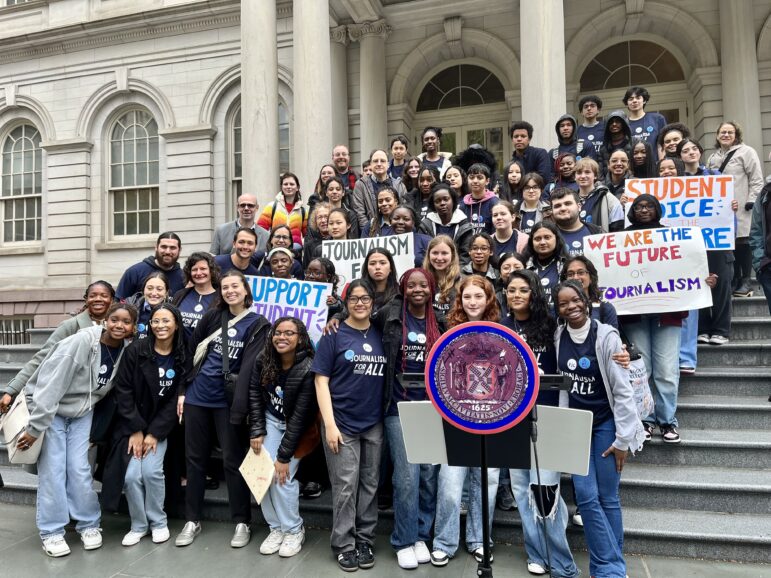
Sistas and Brothas United is a youth-led organization that builds the next generation of community youth leaders in the Bronx, the birthplace of hip-hop. Many of SBU’s leaders have grown up in hip-hop culture, but as developing community leaders, we want to change this culture. The youth at SBU want hip-hop’s message to go back to the way it was when it first started, when it inspired young people and the community to think about facing our problems head-on. Mainstream hip-hop’s abandonment of that consciousness is something for which both the artists and the industry are to blame.
The message that’s being portrayed in a lot of mainstream hip-hop music is one that gives young people the idea that destructive and exploitative behavior is not only acceptable, but expected, even attractive. A strong example of that is how women are depicted—and how men are depicted treating women. In one verse of his song “Bedrock,” Lil Wayne says: “Look it, how she walk. She know she bad. Do your thing baby. I ain’t even mad. And I ain’t even fast. I’m-a stay awhile. Hold yo head Chris, I’m a take her down.” The last bit, an apparent reference to Chris Brown’s assault on Rihanna, suggests that even beating women is something of which some mainstream artists approve.
Some of the young men we’ve grown up with use oppressive language from music to degrade women in their own lives. This misogyny is often paired with a glorification of violence and money, as “I Got Swag” illustrates.
People who listen to these messages are mostly young people who are just shaping their identities and have little or no understanding of their culture. In many cases, these youth buy hip-hop music and study it at a greater rate than they study their school work. The industry controls and manages hip-hop music so only the negative hip-hop artists get the support they need to produce music–which, of course, the industry believes is more marketable.
Artists like 50 Cent who glamorize violence often don’t seem to think about the impact their words have on young people. Young people look up to people like 50 Cent. They begin to think that they need to be a gangster, to get money, girls and guns in order to fulfill their self-worth.
Things were different in hip-hop’s earlier days. In the eighties or nineties everyone was listening to Public Enemy, De La Soul, A Tribe Called Quest and many other artists who were both popular and positive; so if it was possible to promote positive hip-hop then, it’s possible now.
Hip-hop used to address the issues of poverty, unemployment, and violence that we constantly face within our communities and compel listeners to step up and do something to make a difference. Public Enemy once said in the song “ Fight the Power”: “Now that you’ve realized the prides arrived, we got to pump the stuff to make us tough from the heart. It’s a start, a work of art. To revolutionize, make a change–nothin’s strange.”
Like inner-city youth themselves, hip-hop has unlimited potential that has not been tapped. If and only if the music changes to focus on issues like poverty, racism and economic dislocation, it would have enormous power to inspire youth to create change in their lives.
Youth are brain-washed into believing that it’s OK to use the many derogatory terms we hear in hip-hop today. Hip-hop artists project wealth and power that young listeners want to appropriate. But when so many young people call their peers bitches or n—-rs, a generation is devaluing—is disempowering–itself. This adoption of negative culture must be changed before it’s too late. We can’t wait for the day when hip-hop artists use music to build our community instead of perpetuating its destruction.
Yashira Cividanes and Adolfo Abreu also contributed to this City Conversation piece