

Photo by: Matt Schwarzfeld
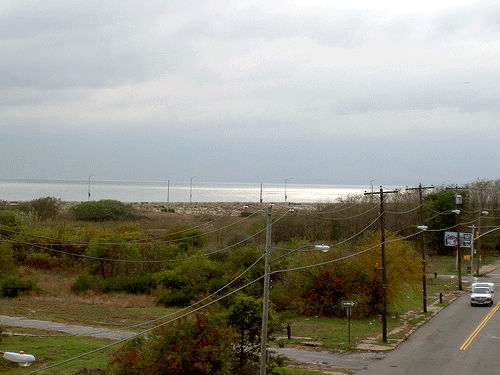
Speculative developers saw potential profits because of the peninsula’s seven-and-a-half miles of pristine beaches. In the more affluent western Rockaways neighborhoods of Breezy Point and Neponsit, beaches are well-manicured and crowded. In the center of the peninsula, surfers give the beaches a character all its own. But in the eastern section – near the neighborhoods most affected by overdevelopment by spec developers – the beaches go unused. The boardwalk has crumbled, way-stations are boarded-up, thick brush chokes off access to the water, and the Parks Department long ago ceased to see the area as a priority for city funding.
The Rockaways peninsula of southwestern Queens is defined by contradictions. Homes on the west end are ensconced in gated communities, and residents pile their groceries into red wagons they pull home along the boardwalk; in the east, there are no grocery stores, so thousands of people cart their food from Jamaica and into the elevators of their public housing buildings (when the elevators work). Though it offers subway access to appealing beaches in a city that prizes usable waterfront – on a clear day, Manhattan’s skyscrapers rise in the distance – much of the peninsula sits undeveloped.
Even in the last five years, when the peninsula has made advances in bridging these contrasts, the progress has been mixed. Thousands of new housing units are being built, most through the efforts of the city’s Department of Housing Preservation and Development (HPD). HPD’s units have sold before construction has even started, at prices unheard of in the area, bringing new life and money to the peninsula. But most of the privately developed units, built in nearby neighborhoods with permissive zoning regulations that allowed large units to be built on small lots, have not sold nearly as well. The developers overbuilt in neighborhoods with fragile or nonexistent markets that have since crumbled.
Because they consider their investment already lost, many speculative developers have struck deals with the city to house the formerly homeless in order to recoup at least some money. Some of these developers-turned-landlords have neglected basic maintenance responsibilities. Concentrations of absentee landlords plus high-needs people with minimal access to basic services and amenities means entire neighborhoods have been left neglected. “They said the Rockaways would be the new Hamptons,” said Anthony Green, a lifelong Far Rockaway resident in his mid-40s. “This isn’t the new Hamptons. More like the new ghetto.”
Even though the city has initiated a rezoning to curb out-of-context development, the experience nonetheless perpetuates many residents’ sour view of city government. Some residents blame city agencies for taking advantage of the area’s housing plight by what they see as an intentional concentration of formerly homeless people, though in many cases it’s unclear what else city agencies could have done.
“The city and the state have been destroying the Rockaways for 40 years,” said Jon Gaska, district manager for the peninsula’s Community Board 14, expressing a feeling commonly heard in the area. “Over the last 10 years we’ve done a good job of keeping them from doing that. But with the overdevelopment and vacancies, they’re back at it again. It’s like they give it to you with one hand, and take it away with the other.”
A long-awaited moment of hope
The history of the Rockaways has been indelibly shaped by real estate speculation built on shaky foundations. The Arverne neighborhood takes its name from Remington Vernam, a speculator who acquired and resold disputed land titles for massive profits in the 1850s. (The name comes from his signature, R. Vernam.) It’s the center of the area’s development, located just east of the center of the peninsula.
City government had a hand in the real estate trends that damaged large portions of the peninsula. From 1947 to 1952, mass suburbanization and modernization of travel diverted the Rockaways’ traditional summer tourist population. No longer able to rent to vacationers, property owners winterized their summer bungalows. The city, desperate for housing for the poor, sent subsidized renters to the converted bungalows.
Though these homes were mostly “built without reference to health, sanitation, safety and decent living,” according to a 1958 article in the “Rockaway Review,” the city neglected to enforce standards or hold landlords accountable. Compounding these trends, federal government redlined the Rockaways – scoring areas with large poor black populations at the lowest investment potential, effectively denying home loans for minority families – which further discouraged investment and ownership.
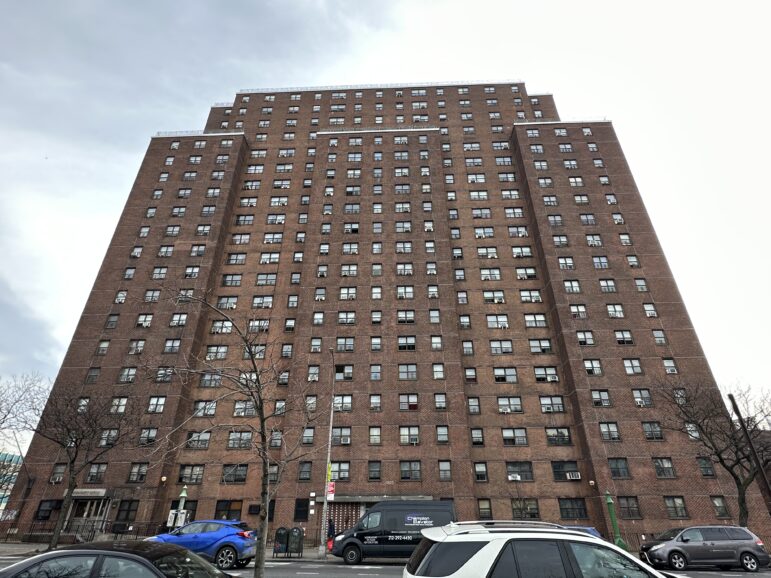
The eastern part of the peninsula’s transition into an underserved and forgotten borderland was cemented when the city razed the worst neighborhoods and built dozens of public housing buildings to house the displaced poor in the 1950s and 60s. With 300 acres – what became known as the Arverne Urban Renewal Area – abandoned for nearly 40 years, the eastern part of the peninsula had the unique distinction of being both one of the least dense but also one of the poorest areas in the city. By 1975 the Rockaways contained 57 percent of all low-income housing in Queens, though the area housed only five percent of its population. In 1990, one-third of the peninsula was on public assistance and nearly one-quarter of households had incomes below $10,000. As in nearby Coney Island, when the tourists left they took the jobs, stores and tax income with them.
To revive the local economy, community and city officials tried for decades to lure private developers to the Arverne Urban Renewal Area, which was under the authority of HPD. Two major proposals were forwarded in the 1980s and 90s: first a Forest City Ratner project to build 10,000 condo units on the beach collapsed under its own scale; then a Toronto-based developer planned a massive sports and entertainment complex, Destination Technodome, that would have created thousands of jobs but was scuttled because of poor transit options. Both plans came in an era of stagnant real estate development across the city, when developers seemed to abandon lots more frequently than develop on them.
Officials were exasperated. “For the longest time, everyone thought Rockaway wasn’t an attractive place to invest,” says former Queens Borough President Claire Schulman, who served from 1986 through the end of 2001. “But it is an attractive place to invest. It could be every bit as beautiful as the Hamptons.”
It wasn’t until the last 10 years that the future started to brighten. In the super-heated real estate market of the late 1990s, when homes across the five boroughs sold at record prices but land was increasingly hard to come by, the city turned its focus to the Rockaways. As part of its New Housing Marketplace Plan, the Bloomberg administration has committed to construct or preserve 165,000 units of affordable housing, which would provide homes to 500,000 people, by 2013. This is part of the mayor’s PlanNYC blueprint for growth, which is modeled on expectations of more than 1 million new residents by 2030.
Several thousand of these units will be in the Rockaways in the Arverne Urban Renewal Area, the HPD property held over from when city bulldozed the bungalows. According to Wendell Walters, HPD’s assistant commissioner for housing production, the goal was not limited to providing quality affordable housing. The HPD project also was intended to fuel private construction and resuscitate the housing market. This model has helped capitalize development in blighted neighborhoods across the city, from the south Bronx to east Harlem to central Brooklyn. (The city acquired large amounts of land in these areas in the 1970s and 80s because of land abandonment and disinvestment.) Recent HPD projects have brought quality affordable housing to market, and also given developers reason to invest in the community.
“Today ends 40 years of dashed hopes and deferred dreams for the Arverne community, and it opens a bright new chapter in the future of the Rockaways,” Mayor Bloomberg said at a ribbon-cutting ceremony the day the first residents moved into Arverne-by-the-Sea in May 2004. Arverne-by-the-Sea and Arverne East, each billion-dollar projects, as well as the much smaller Water’s Edge project, will create more than 4,000 affordable and high-end condo units. The developers selected by HPD are also building stores, parks, new roads, schools and sewers.
“This whole place was one empty lot, like a ghost town,” said Vincent Morales, a Parks Department employee who has owned a home near Arverne for 15 years. “Now there’s development everywhere. It’s a whole new place. Slowly but surely it feels like we’re becoming a real community.”
Local officials were exuberant that their community found its way into the city’s plans, but were far less concerned with creating affordable housing. Their primary goal was to build high quality housing that would appeal to middle class homeowners who would raise the area’s median income, level of civic participation, and voice in city and borough policy. For the most part, both sides have been successful, as families who are minorities, middle class, or both have bought homes and become active in the community.
“We realized that the only way to survive is by really bringing in people with spendable dollars,” said State Assemblywoman Audrey Pheffer. “We agreed, let’s not move anybody out who has been here, but let’s just kind of build up around them.”
But the success of Arverne – much of which is already sold out, according to the website – is only the beginning of the story. Much of the private development it triggered has failed, threatening to undo strides made in the last decade. Some residents are starting to fear that history is repeating itself.
From cash cow to escape plan
Five years ago, Annabelle, a Guyanese immigrant, mother and grandmother, opened a Caribbean restaurant in a mostly abandoned section of Far Rockaway. Though the area was poor and few restaurants had ever had any success, she believed that the Arverne projects would lift the entire peninsula. She envisioned a neighborhood café, a finer dining alternative to the Chinese take-out nearby. Annabelle (who didn’t want her last name mentioned) set the tables with cloth napkins and silverware and hoped someday to expand into the vacant storefront next door, which she would convert into a live performance space.
At first it appeared her gamble would pay off. Before she knew it, the neighborhood was transforming: in place of the empty lots and dilapidated homes, speculative developers built condos and apartments. Yet her customers never came, because almost all of the new homes never sold. Today they are not occupied by homeowners, but by subsidized tenants with limited disposable income to spend at the café.
~
Large numbers of real estate speculators had come to the Rockaways for reasons similar to Annabelle’s. Land was cheap, the future seemed bright, and any business risk appeared to have a big upside. Inspired by HPD’s work in Arverne and its promise for a wealthier community, they bought small pieces of land wherever they could.
Walters of HPD thinks Rockaway offered a special allure—even more so than other areas near HPD efforts, such as in East New York, Brooklyn or Melrose in the Bronx. He suggests that the Rockaways’ proximity to the ocean and its frontier quality made it especially appealing for small and mid-size housing developers. One such company active in the Rockaways is United Homes, the controversial Jamaica, Queens-based developer which currently faces charges of racial discrimination and predatory lending in a series of pending lawsuits pertaining to issues elsewhere in the city. “I think the attitude is that because the city is doing a project out there, they can do a project and snatch up land on the cheap. But it’s fair to say that it’s come back to bite a lot of these folks,” Walters said.
Rockaway was also vulnerable to unwise development because of outdated zoning. The existing zoning framework was adopted in 1961 and suited to very different times. According to Brad Lander, director of the Pratt Center for Community Development, it was geared toward a different economy and aesthetic; thus it created large manufacturing zones and more of a “tower in the park” layout. Before the development boom of the 1990s, many areas that were zoned for large-scale industry and tall buildings were abandoned. As the city’s economy revived, developers saw an opportunity in tearing down existing structures and building big.
“The zoning was completely general and it allowed all kinds of crap to be built,” said Paul Graziano, a land use consultant hired by local Councilmembers Joseph Addabbo, Jr. and James Sanders, Jr. to help the community board and civic groups develop a rezoning plan.
The Rockaway neighborhoods most affected by development that was out of scale relative to the surrounding neighborhood had been comprised of mostly single-family, two-story homes. But the 1961 zoning regulations allowed developers to insert much larger buildings – thus, the neighborhood now has a disjointed and unplanned feel. On a block in Far Rockaway that was once lined with one-story bungalows with small front yards (a handful of which still remain, though most are run-down and boarded up), the 1961 zoning had no height or setback – meaning distance from the sidewalk – requirements. Wedged between one-story bungalows, developers built four-story buildings with no setback; another company is erecting a 14-story building on the same street that blocks views of the ocean.
That makes some residents angry. “You have the pygmies rush in, and say, ‘Oh, I have a 40,000-square-foot lot and I could put 10 apartments on it,’” said Vince Castellano, a longtime area property owner and landlord. Castellano faults local developers for failing to understand the basic concept of market saturation and operating with a herd mentality.
When fault lines appeared in the city’s housing market over a year ago, the fate of these new homes was sealed. Strained lending markets – both for developers and buyers – as well as instances of foreclosure have driven down rates of home ownership. “Five years ago, people started to hesitantly come back to the area,” Graziano said. “Then everyone wanted to get in on the game. Spec housing and low-end rentals basically strained the recovery in [these neighborhoods], which was extremely fragile to begin with.”
Compounding this problem, a lot of this new construction is low quality. Glaring problems are visible everywhere. Doorframes are falling off, vents have been kicked in, and windows are boarded up. One conspicuous example is a 14-story building on the beach. According to a construction worker who has been on the site from the start, early in the project a foreman made an error in reading the blueprints, so the balconies face inland rather than toward the ocean. Such incompetence is common.
Because these small developers built without lining up a buyer prior to construction, they found themselves sitting on expensive investments they couldn’t sell. Short of shuttering the properties or letting the bank take them, developers only really had one option: turn to government-subsidized clients referred from homeless shelters. Though renting compromises their future ability to sell the property, many owners opted to recoup some of their expenses rather than suffer a complete loss on their investment.
Annabelle, the proprietor of the Caribbean restaurant, is also at the mercy of these larger market forces. Her doors are open but she’s just barely holding on. Since the clientele she expected never came, she downgraded to disposable cutlery and napkins, and quickly abandoned the goal of expanding next door. The property is now a liquor store, customers separated from clerks and the alcohol by thick bulletproof glass. Annabelle is convinced that the teenagers out front are selling drugs.
“For the guys who got in the game late, the music stopped and they found that there were no more chairs left to sit in,” says Gaska – but then there was the city, offering a way out.
Who’s to blame?
It’s hard to fault the city too much, though, since HPD has not only transformed the area, but has also achieved its goals of stimulating private development. Similarly, City Planning has been fairly responsive to residents’ calls for a rezoning.
The agency Gaska and others take the dimmest view of is the Department of Homeless Services (DHS). They believe that DHS, much like welfare agencies in the 1950s and 60s, has an unspoken policy of placing clients in the Rockaways. For DHS, however, any other course of action may very possibly mean failing its primary mandate.
Residents point out that the housing in which many formerly homeless families find themselves is of dangerously poor quality. Shallah and Melody Currence, a young couple who moved with their two toddler daughters from shelters in the Bronx, can attest to this firsthand. The Currences live in a ten-block chunk of new construction in Far Rockaway that’s ravaged well beyond its age. Though their building was finished less than two years ago, raw sewage from a cracked septic tank leaks into the front yard. Since the water in the pipes frequently smells like excrement, the family drinks only bottled water (at a cost of nearly $50 a month) and they boil water for bathing. The heat didn’t work all winter, so they kept the kitchen oven going full blast throughout the day with the oven door open.
~
The Currences’ home, as well as those around it, did meet DHS’s inspection requirements before they moved in. As a new building, it was actually in far better condition than any of the other places the family considered. But whether landlords continue to meet their responsibilities once tenants move in is another question. The Currences haven’t seen or heard from their landlord, Kevil Forrester, in nearly nine months. Forrester, who owns only that one property in the Rockaways, could not be reached for this article.
Landlord absenteeism and negligence could have something to do with DHS policy. The Currences were enrolled in the agency’s Housing Stability Plus (HSP) program. HSP, which is being phased out, was widely criticized across the city for, among other things, its lax inspection requirements—including allowing landlords to self-report that they’d made a repair without external confirmation. “[T]he fact that it doesn’t require adequate inspections makes it just ripe for that kind of abuse by slumlords,” said Patrick Markee, senior policy analyst for the Coalition for the Homeless. (HSP has been replaced by a new program, Work Advantage, in which DHS re-inspects the apartment and applies stricter federal HUD guidelines for initial approval.)
Though HSP may have been part of the problem, at the same time some clients do not know their rights and options. The Currences, for example, say they haven’t reported the conditions to HPD (which, in addition to promoting new construction on city property, also enforces landlords’ code compliance). In fact, they had never heard of HPD. Getting the tenant to report violations is not DHS’s responsibility: once DHS helps a client find permanent housing and leave a homeless shelter and he or she signs a lease, that person is the same as any tenant and must deal directly with the landlord or a compliance agency like HPD. (DHS does provide resources such as a Tenants’ Rights Guide and hands-on support through its HomeBase Program.)
Many people in the area also blame the tenants themselves, who they think have little investment or concern for the quality of the neighborhood. “The promise of a new building on the street goes down the drain” when a formerly homeless New Yorker occupies a home, said Steve Cromity, a 22-year resident of the Bayswater section. “You expect someone to own it, to take care of it and be a part of the community. But tenants are not owners. Even good tenants don’t always take care of the property. They don’t have a vested interest.”
Rockaway residents also argue that people should not be placed in the area because the community is unable to provide them jobs or access to necessary services. “The only job you gonna get out here is on the corner as a pharmacist. You got to be self-employed,” said Charles West, a subsidy recipient who lives in one of the blighted new homes.
DHS says it doesn’t decide where people go. Rather, its job is to help connect clients to brokers or landlords who come to the agency, which means that the location of listings is out of the agency’s hands. According to a DHS spokesman, clients are free to sign a lease in the same way as any tenant. It is inaccurate to say that the agency “places” them in one location over another. “DHS helps clients move out of shelter and return to permanent housing,” said DHS spokesman Eric Deutsch. “Our HomeBase Aftercare program provides extensive services to clients who have moved out of shelter, including family and landlord mediation, job training, entitlements advocacy and legal assistance.”
Gaska says he pushed the city for a moratorium on referrals to the area – or, at a minimum, a reassessment of the scale of referrals. He says he’s unsuccessfully requested meetings with mayoral representatives for years. However, DHS says a moratorium would be illegal since it would discriminate against a tenant based on their status as a shelter resident.
“The city is, quite frankly, happy this happened here,” Gaska said. “They have nowhere else to put them. The city hit a home run in the Rockaways.”
Trying to put the genie back in the bottle
Whether the damage is already done is a point of some debate, but it’s clear that the experience has shaped the actions of local and city officials.
For the past two years, the community has worked with the Department of City Planning (DCP) on a peninsula-wide rezoning. The subject of regular headlines in the weekly paper “The Wave” and monthly community board and civic association meetings, the rezoning is meant to guide and constrain future development. This type of “contextual rezoning,” which is happening in residential neighborhoods across the city, is designed to make future development consistent with existing structures in the immediate area.
In late April DCP formally submitted its contextual rezoning proposal, based on a long back-and-forth with the community board. This step starts the clock on the Uniform Land Use Review Procedure (ULURP) process. The community board approved the plan last month, so it now goes to Borough President Helen Marshall and then City Council.
In Somerville and in Far Rockaway near Annabelle’s restaurant, height and setback limits will be imposed; planners expect this will discourage rampant demolition and thereby protect the remaining old structures. “We use rezonings to protect neighborhoods from overdevelopment,” said John Young, director of DCP’s Queens office. “We look at where development trends would create pressures that would significantly diminish a neighborhood’s character, and where there’s an opportunity to direct pressures away from intact residential streets and onto locations that are more appropriate.”
As the proposal winds its way through the ULURP process – which can take the better part of a year – construction continues. Even in the most blighted areas of new homes, several construction crews can be seen on nearly every block.
Planning consultant Graziano faults the city for a sluggish rezoning timeline. He argues that the pre-certification process—the communication between City Planning and the community board prior to ULURP—would have been much quicker if the city prioritized the project. “Bloomberg was re-elected with a promise to prioritize residential rezoning in areas like the Rockaways, Laurelton and central Flushing,” he said. “He broke that promise, and instead pushed economic engine rezonings in places like Willets Point and Jamaica. Rockaway was supposed to be done two years ago, but sat languishing until now.”
Brad Lander from the Pratt Center thinks it’s more a matter of inadequate capacity. “This wouldn’t be so much an issue if the city had enough planning staff. But because they’re limited, they’ve mostly been deployed in a relatively reactive way where development and overdevelopment has already taken place,” Lander says.
HPD has also adjusted mid-course based on the turns of the housing market. Agency spokespeople say they are concerned with the slowing pace of sales in Water’s Edge, the smallest of the three Arverne projects. They have also agreed with the Arverne-by-the-Sea developers to rephase the project: the next phase was supposed to build 800 new units, one of the densest parts of the project; but because of the uncertain market, HPD agreed to delay that phase and instead build a less-dense component.
“We’ve been very careful,” HPD Deputy Commissioner Walters said. “No developer wants to enter into a deal if it won’t sell. There are obvious problems in the condo market right now, so it just makes sense to look at that part at a different time. We’re just as interested in making sure the project is successful as the [developer] is.”
The housing agency says it has not lost its focus on larger goals, in spite of the fate of sales among private development. “Although the current economic environment means places like Far Rockaway and elsewhere are having difficulty selling, in order to increase the overall housing stock over the next 30 years we certainly need to build more housing,” said HPD spokesperson Neill Coleman. “In places like Arverne, the need for affordable housing is pretty clear. Private homes that are affordable to middle income families are certainly a good thing. And a mixed-income neighborhood is a good thing.”
But for some who are closer to the consequences of overdevelopment, this explanation doesn’t suffice. Gaska is so frustrated that he’s simply resigned himself to the fate of these blighted communities of new development.
Graziano, the land use consultant, is similarly rueful. “The damage has already been done in the stuff that’s already built,” he said. “The smartest thing to do would be to tear it all down and start over. If I had a hundred million bucks that’s what I’d do.”