

As the New York state legislature hurtles toward the close of an action-packed session at the end of June, city affordable housing advocates are determined that the State Senate vote to repeal “vacancy decontrol,” a provision of housing law that allows the price of some rent-stabilized apartments to increase to market rate.
Although the presence of a slim majority of 32 Democrats in the 62-member senate has energized housing activists with a rare sense of opportunity, their effort faces the challenges of an unenthusiastic senate Housing Committee chairman, Bronx Sen. Pedro Espada Jr.; too few senators backing the repeal bill (S2237A) to pass it; and the countering pressure and arguments of the landlords’ lobby.
Despite that, advocates insist the city is losing tens of thousands of rent-stabilized units every year and cannot afford to maintain the status quo any longer. “I think this is the year that it has to happen. The entire rent regulation system is on a brink right now,” says Michelle O’Brien, executive director of Housing Here and Now and director of the New York Is Our Home campaign, which is focused on repealing vacancy decontrol with the help of other housing groups, the Central Labor Council and the Working Families Party.
“If we win this, it’s the biggest victory for tenants since 1974,” O’Brien said, referring to the year when the Emergency Tenant Protection Act and its rent regulations were passed. “And if we lose, we’re going to see the deterioration and collapse of rent regulation as a viable affordable housing program in coming years.”
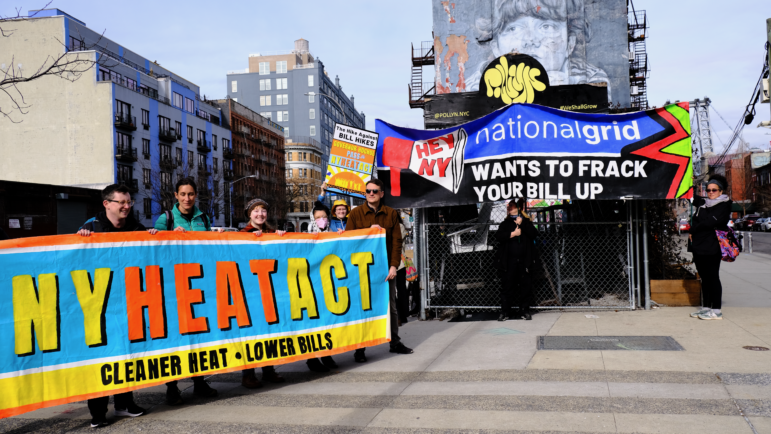
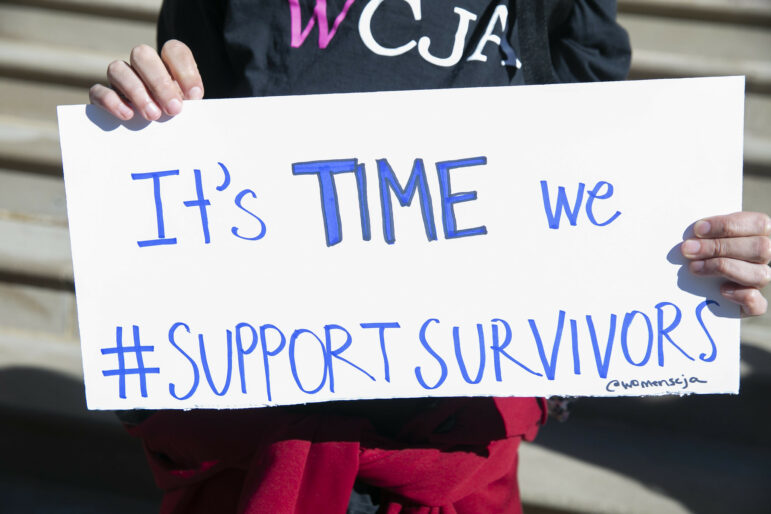
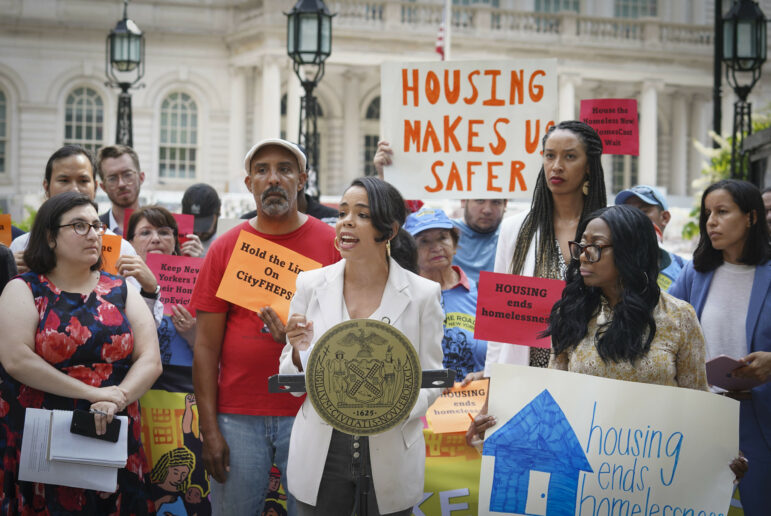
To corral more support for the senate bill, which passed the Assembly earlier this year, activists are doing everything from door-to-door canvassing in specific neighborhoods and holding rallies in each borough to testifying at hearings and demonstrating at City Hall and in Albany – all with the goal of garnering the votes of Democratic senators Espada, Jeffrey Klein of the Bronx, Carl Kruger and Martin Malave Dilan of Brooklyn, and Republicans Martin Golden of Brooklyn and Andrew Lanza of Staten Island.
On March 30, when Mayor Bloomberg signed into law an extension of the city’s rent stabilization laws (which is essentially a technicality, because City Council is required every three years to declare a “continuing housing emergency” if the rental vacancy rate is 5 percent or less; the latest figure is 2.88 percent) and took comments at the event, activists used the moment to advocate for vacancy decontrol. Without further action, says Met Council on Housing organizer Mario Mazzoni, city officials were only “patting themselves on the back for perpetuating a system they’re allowing to slowly die.”
The campaign is slow going, though. According to O’Brien, as of Monday 23 senators are signed on as co-sponsors; it was 24, but Diane Savino of Staten Island dropped off. (But, O’Brien says, whenever the vote is taken, approval is expected from some who are not “co-sponsors.”) Giti Dadlani, who works as a rent regulation organizer with the statewide group Tenants & Neighbors, said of Espada that “there have been several attempts to set up a meeting with him, but he’s been really unresponsive.”
That may be because Espada, who was elected to the 33rd District seat in November, recently laid out his own housing program that “will not be determined by politics, but rather by sound and sensible policy,” he wrote in a statement. His agenda includes items like improving the SCRIE (Senior Citizen Rent Increase Exemption) program by providing a tax credit incentive to stimulate landlord participation, and implementing a moratorium on Mitchell-Lama buyouts through 2010. He also points to millions of housing budget dollars restored or won as victories for residents in need of affordable housing. Espada’s statement also announces the gathering of “a renowned group of academia and think-tanks at an ‘Affordable Housing Summit’ on April 30th at New York University to discuss economic implications of changes to the rent regulation system, surviving the foreclosure crisis, and enhancing public-private partnerships to affordable housing development” – although several of the city’s housing and real estate leaders had not yet heard about it.
“The Senate Democratic leadership, along with many Democratic Senators, has
not reached a consensus on vacancy decontrol, and, therefore, I am reserving
judgment on this issue,” Espada said. Senate Majority Leader Malcolm A. Smith plans to “address these issues within the conference” of all 32 Democrats, said spokesman Austin Shafran. But Smith is “committed to supporting low-income New Yorkers by improving rent regulation and vacancy decontrol laws. We’re hoping to accomplish it this legislative session.”
The bill would repeal provisions of city and state statutes, which have been in effect for about 15 years, that remove apartments from the rent stabilization guidelines for how much rent can increase every year. At present, when a stabilized apartment becomes vacant, it’s in landlords’ financial interest to use available mechanisms to lift the rent above $2,000 – above which these units are no longer regulated. Under the incentives of existing law, “virtually every apartment in Manhattan below Harlem that becomes vacant is deregulated,” says Community Service Society senior housing analyst Tom Waters, who is providing research and analysis to the repeal campaign.
As firmly as tenant advocates are convinced that now is the time to rewrite the laws, the Rent Stabilization Association – which represents 25,000 building owners and landlords – maintains its longstanding position that the cost of doing business in New York City is so high that rents must be allowed to “decontrol.” RSA government affairs director Frank Ricci dismisses the tenants’ 10-bill package, which includes vacancy decontrol, as “bills geared to protect wealthy people in Manhattan” – because occupants of rent-stabilized apartments do include the well-off.
Ricci estimates that a Manhattan unit costs a landlord $1,000 per month in property taxes, water and sewer fees, fuel costs, insurance and labor costs and more. Protecting a profit margin means the RSA is working hard against the repeal bill. “We’re probably talking to the same six senators they’ve targeted,” Ricci said.
The scope of loss of rent-stabilized units is a key issue on which the players disagree. Ricci estimates a loss of 75,000 units over the past 13 years. According to the state Division of Housing and Community Renewal – which administers rent regulation – in 1994 there were 909,501 stabilized units in New York City, and in 2007 there were 851,374, for a net loss of 58,127. But housing analyst Waters, while saying “nobody knows the real number,” uses the Housing Vacancy Survey to estimate that “tens of thousands” of units go to market rate every year due to vacancy decontrol. Some advocates claim as many as 300,000 units have been lost since the mid-90s – a high number, Waters says, “but I’m not prepared to say it’s too high.” He’s working on a new report aimed at answering the question more definitively. The survey’s large margin of error presents a challenge for estimators, he said.
The main hindrance for an accurate count is that no official registration with DHCR is required when a rent-stabilized unit exits the program due to vacancy decontrol. That could change, as last month Sen. Espada introduced a bill (S3454) into his own committee at the behest of DHCR Commissioner Deborah Van Amerongen to require just that. It may provide a small patch of common ground.
Things are changing in the state’s housing scene, and not always in predictable ways. “There’s clearly a different dynamic at play in Albany,” says RSA’s Ricci. “But that doesn’t mean that elected officials are any less rational than they used to be, either.”