

The Fires
By Joe Flood, 325 pp. Riverhead Books. $26.95
In 1961, President Kennedy hired Robert S. McNamara away from his job as president of the Ford Motor Company to, essentially, manage the conflict in Vietnam just as he had the American automotive industry. As secretary of defense, McNamara – a Harvard MBA – hired top analysts from the RAND Corporation, a nonprofit problem-solving think tank, to help.
“Systems analysts were soon wielding more influence over American defense strategy than any five-star general or chief of staff,” writes Joe Flood in his fascinating new book, “The Fires: How a Computer Formula, Big Ideas, and the Best of Intentions Burned Down New York City – and Determined the Future of Cities.”
It was only a matter of time, Flood explains, before New York City would attempt to manage its fires just as McNamara was managing the war: New York was simply, and merely, another system.
Except New York, like Vietnam, wasn’t so simple, and the fatal flaw in applying a RAND model to New York City’s fires lay in the fact cities are comprised of human beings, and human beings make mistakes.
The Fires is about those mistakes. But like most great books about New York, it does not isolate its subject. The blazes that inspired its title, which ravaged the Lower East Side, Harlem, Brooklyn, and the South Bronx during the 1970s – what New York City firefighters would call “The War Years” – are only part of the story. Their causes were rooted in so many parts of the municipal puzzle that to study them is, in effect, to study New York City itself.
And to study New York, of course, is to study the very things that define this city: politics, business, socio-economics, architecture, and the clumsy balance of wildly divergent interests that somehow keeps New York from tipping into chaos. But Flood goes even further, charting the connections between New York’s fires and the standardization of corporate management, the Vietnam War, and a nation too quick to embrace the computer as an infallible aid to mankind.
With main characters like Mayor John Lindsay (1966-1973), Fire Chief John O’Hagan (1964-1978), and New York’s “Master Builder,” Robert Moses (1930s-1960s), The Fires focuses on a few individuals, tracking them throughout their long and unpredictable careers, to give human faces – sometimes sympathetic, often not – to the mistakes that nearly destroyed New York City.
If Lindsay, O’Hagan, and Moses are the main characters in this tragedy, it is those mistakes – born of arrogance, laziness, racism, and basic human error – that drive the narrative of The Fires.
The details are revelatory. In the 1950s, corporations shifted from industry-specific forms of management to one ruled by statistics and formulas. The pop-sociologist William H. Whyte predicted in his 1956 book, The Organization Man, that the so-called Whiz Kids of corporate America, who had not worked their way up from the assembly lines and mail rooms but instead graduated from Wharton and the Harvard Business School, would usher in a new age of management across the board. “It is from their ranks that are coming most of the first and second echelons of our leadership,” wrote Whyte, “and it is their values which will set the American temper.”
Whyte’s prophecy was fulfilled with the elevation of corporate numbers men like McNamara into government, where they grafted the analytics of bookkeeping and assembly lines onto questions like how to battle a communist insurgency, or how to position firehouses in a city suffering from a tightening budget.
Soon, the city was using metrics to determine when and where to place fire services. But Chief O’Hagan and NYC-RAND were committed to doing “more with less,” and they interpreted those metrics selectively. Ancillary firehouses in poor neighborhoods were closed; houses in wealthy, politically “important” areas were kept open despite their relative inactivity. In the end, NYC-RAND’s failsafe metrics did less to stop the fires than support what O’Hagan wanted to hear.
Despite NYC-RAND’s optimistic reports, fires in partially abandoned buildings rose 800 percent in five yeas during the late 1960s. “Fires turned inhabited apartments into vacant rooms,” writes Flood, “which, in turn, attracted junkies and kids who carelessly burned trash for heat, started blazes with errant cigarettes, or lit fires for kicks.” Still, arson accounted for only 7 percent of the city’s overall fires.
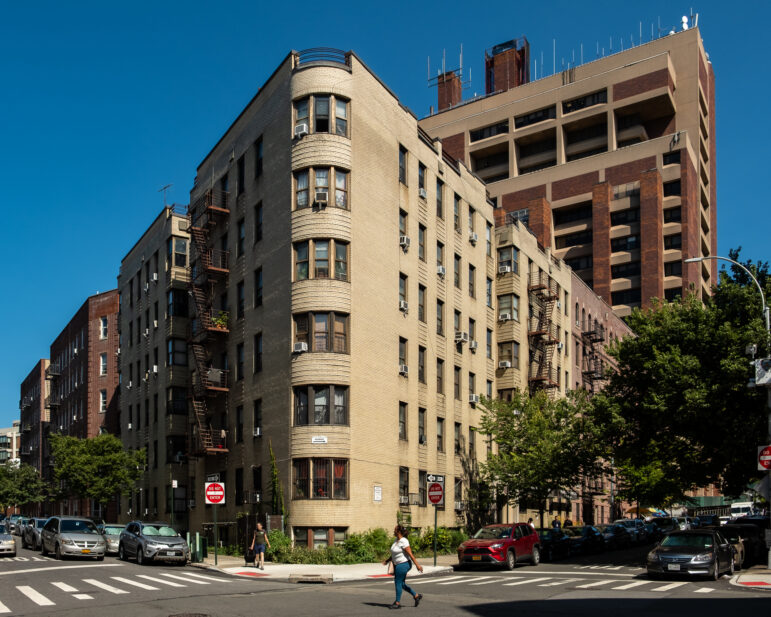
With each new wave of fires, more legitimate residents moved out, and soon entire city blocks were falling into charred ruin. In 1965, there were 2,900 vacant buildings in New York City. By 1969, there were 4,344, a 67 percent increase that does not even include the thousands of buildings that had burned down completely or been literally bulldozed out of existence.
But The Fires is more than a history lesson. Bringing the story into 2010, Flood considers Mayor Bloomberg’s own metrics-based form of governance, which, in the words of the New Yorker’s Ben McGrath, “can be measured only through Scorecard Cleanliness Ratings, NYCStat Stimulus Trackers, and sustainability indicator dashboards.” Yet, many things are different now, and The Fires arrives at a hopeful, if surprising, conclusion.
Policy wonks may find themselves craving more detail in Flood’s account, finding in its smooth narrative the occasional ripple or minor hole. But even they will note that in this keenly researched and masterfully told story, Flood manages to not just challenge conventional wisdom in explaining why fires ripped through New York City in the 1970s, but to pull you into that world, place you on the front lines, and give you a sense that you, too, lived through The War Years.